What is a loyalty program?
Most adults belong to at least one loyalty program, often several: an airline, a hotel group, a supermarket, a bank card. The idea is old, but the mechanics behind it have changed a great deal. This guide explains what a loyalty program is, how earning and redeeming work, the main types of program, why programs partner with each other, and where a network such as Cosmo fits.
What is a loyalty program?
A loyalty program is a structured way for a business to reward customers for repeat behaviour. The customer joins, usually for free, and receives a currency (points, miles, stars, cashback) or a status tier in return for spending, visiting or engaging. The business gains data, retention and a reason for the customer to choose it over a competitor the next time.
Three elements define any program:
- An earning rule: what the customer does to receive value, for example one point per dollar spent, or bonus points for a specific product.
- A currency and ledger: the unit of value and the record of each member's balance.
- A redemption catalogue: what the currency can be exchanged for, from discounts and free products to flights, hotel nights and experiences.
How do loyalty programs work?
When a member transacts, the program records the activity, applies the earning rule and credits the member's balance. The balance is a liability on the program's books until it is redeemed or expires. When the member redeems, the program debits the balance and delivers the reward, either from its own inventory (a free flight on the airline's own aircraft) or by buying it from a partner.
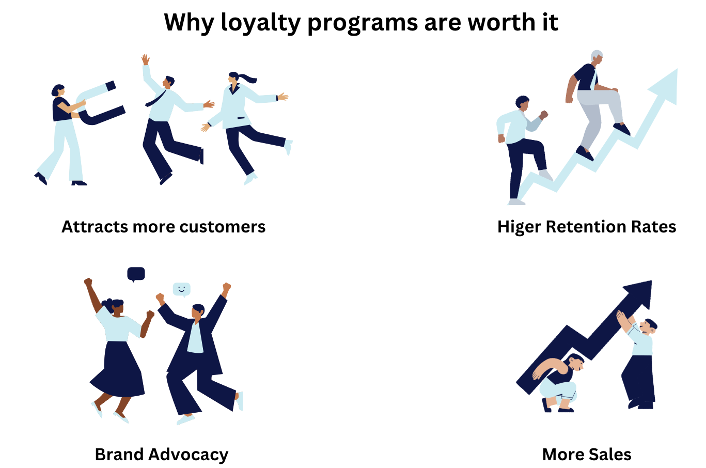
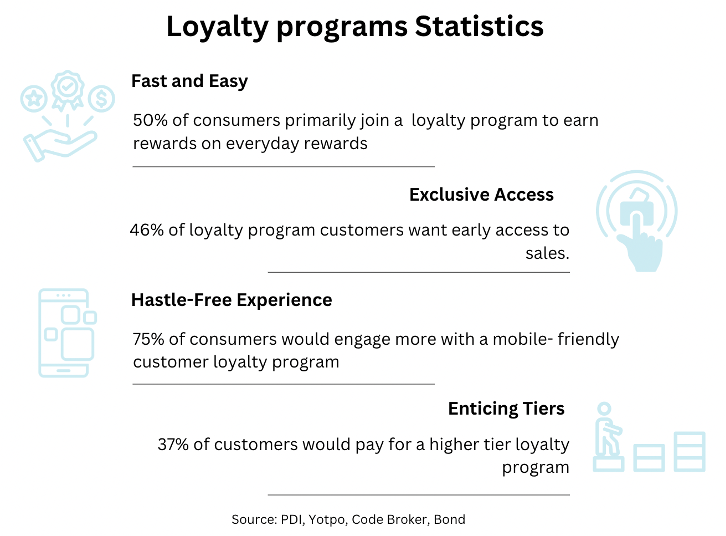
Members expect value in return for their attention. Discounts are the most common expectation, followed by points that accumulate toward something larger, and early or exclusive access to products. Programs that deliver on these expectations see higher purchase frequency and a larger share of each customer's category spend.
What are the main types of loyalty program?
- Points programs: earn a currency on spend and redeem it from a catalogue. Airlines, hotels and most bank cards use this model.
- Tiered programs: status levels (silver, gold, platinum) unlock benefits such as upgrades, lounge access or priority service. Often layered on top of a points program.
- Cashback programs: a percentage of spend returned as money or statement credit. Simple to understand, with less emotional pull than aspirational rewards.
- Paid membership programs: the customer pays a fee for a bundle of benefits, such as free delivery or exclusive pricing.
- Coalition and partner programs: several brands share one currency, or allow their currencies to be exchanged, so a member can earn in one place and redeem in another.
Programs are also shaped by their industry. An outdoor-gear retailer might reward event attendance as well as purchases and let members redeem for experiences rather than products, because that is what its customers value. A bank card program tends to emphasise travel redemptions because flights and hotel nights have high perceived value relative to their cost.
Why do loyalty programs partner with each other?
A single program can only reward what it sells. An airline can give away seats; a bank has nothing of its own to give except cash. Partnering lets each side offer what the other has. The bank issues airline miles to its cardholders, the airline gains a distribution channel it does not have to build, and the member gets a reward they actually want.
These partnerships are valuable but costly to set up. Each one needs a commercial agreement that prices the currency, a technical integration between two unrelated systems, and a settlement process to reconcile and pay for what was issued. That overhead is why most banks offer only a handful of airline and hotel partners, and why many programs never reach the financial institutions that would like to issue their currency. The companion article on loyalty partnerships covers the economics in more detail.
Where does Cosmo fit?
Cosmo is a loyalty network for banks, fintechs and card issuers. It provides the three things every partnership needs, the partner contracts, the integration and the settlement, once, so that an issuer can reward customers in airline, hotel and retail programs through one integration instead of one per partner. Loyalty programs join the same network to reach financial institutions without a separate build for each.
For members, that means more ways to use the points they already have: converting bank rewards into miles through point exchange, earning in a partner program through a co-branded card, or earning across several programs on one card with Multibrand. For the businesses behind the programs, it means new partnerships are a configuration rather than a project.
Summary
A loyalty program rewards repeat behaviour with a currency or status that can be redeemed for value. Points, tiers, cashback, paid membership and coalitions are the main models, and most large programs combine more than one. Partnerships multiply what a program can offer but have traditionally been expensive to build. A loyalty network removes that cost by supplying the contract, integration and settlement once for every partner on it.