Why form loyalty partnerships?
A customer pays for groceries with a bank card and earns airline miles. Another books a hotel and earns points that later pay for a flight. Neither the supermarket nor the hotel runs an airline. These experiences exist because of loyalty partnerships: agreements that let one brand issue or accept another brand's rewards currency. This article explains why brands form them, what makes them hard, and how a network changes the economics.
What is a loyalty partnership?
A loyalty partnership is an agreement between two organisations that lets customers earn or redeem rewards across both. The most common form pairs a financial institution with a travel program: the bank issues airline miles or hotel points to its cardholders, and pays the program for each unit issued. Other forms include retail coalitions, hotel and airline exchange agreements, and fintech apps that let users convert a wallet balance into a partner currency.
In every case the partnership has three parts: a commercial contract that prices the currency and sets liability, a technical integration that moves the rewards, and a settlement process that reconciles and pays for what moved.
Why do brands form loyalty partnerships?
Because a single program can only reward what it sells. Partnerships let each side offer something it does not have:
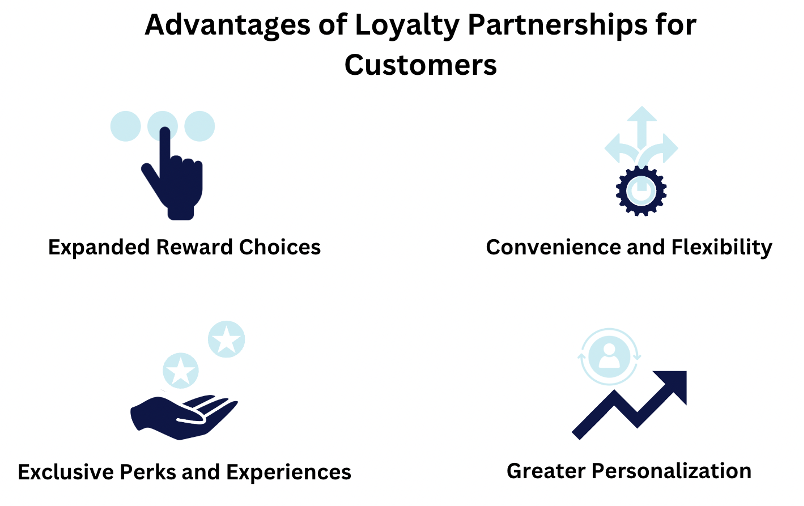
- For the issuer (a bank, fintech or card issuer): rewards customers actually want. A statement credit is forgettable; a flight is not. Travel currencies raise card engagement and spend without the issuer having to run an airline.
- For the program (an airline, hotel or retailer): a distribution channel. Every bank that issues the program's currency is a sales channel the program did not have to build, and every mile sold to a bank is revenue before the member has flown.
- For the member: faster progress toward meaningful rewards, because everyday spend contributes to the same balance as travel spend.
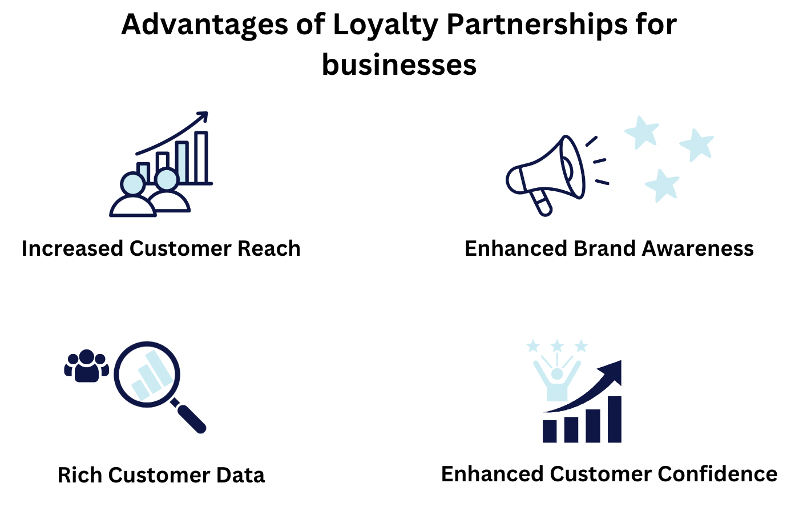
The second-order effect matters as much as the first. Customers tend to concentrate their spending with the brands whose rewards they value, so a program with more useful partners captures a larger share of each member's wallet. Partnerships are a growth lever, not just a marketing cost.
Why are loyalty partnerships hard to scale?
Each partnership is built from scratch. Legal teams negotiate a bespoke contract. Engineering teams build against the partner's API, which looks nothing like the last partner's API. Finance teams reconcile a new invoice format in a new currency. None of that work transfers to the next partner, so the tenth partnership costs about as much as the first.
The arithmetic is unforgiving. Picture ten loyalty programs as ten islands. Linking every pair with its own bridge takes 45 bridges. Each bridge takes months to build and must be maintained forever. In practice most institutions build three or four and stop, which leaves members with a narrow set of redemption options and leaves programs without the distribution they wanted.
Relevance adds a second constraint. Partnerships work best when the brands share customers: a regional airline and the banks its passengers use, a hotel group and the card issuers in its key markets. Finding and contracting those specific pairings one at a time is slow.
How does a loyalty network change this?
A network replaces the bridges with a hub. Each program and each issuer builds one link to the hub and, through it, reaches everyone else on the network. Ten islands need ten links instead of 45, and the eleventh island adds one link rather than ten.
Cosmo is that hub for banks, fintechs and card issuers. It provides the partner contracts, the integration and the settlement once, for every program on the network:
- One contract gives access to the programs on the network. An issuer that already has a direct agreement with a partner can keep it and still use the integration and settlement.
- One standardized API issues into any program through the same call. Adding a partner that is already on the network is a setting in the portal, not a new build.
- One monthly settlement produces a single statement across every partnership, so finance reconciles one position instead of one per partner.
Programs join the same network for the mirror-image benefit: distribution to financial institutions through one integration, with standardized terms and one counterparty for settlement.
What can be built on a loyalty partnership?
Once the partnership exists, several products run on it:
- Point exchange: members convert bank or wallet rewards into airline, hotel and retail currencies in real time.
- Co-branded cards: a card tied to a partner program, where the issuer keeps the card and the customer and the network supplies the loyalty side.
- Multibrand: one card that earns across several programs at once, with the cardholder choosing the split.
- Direct issuance for campaigns, service recovery and account milestones, without a card transaction behind it.
Summary
Brands form loyalty partnerships because no single program can reward everything its customers want, and because distribution through partners is cheaper than building it alone. The limiting factor has never been demand; it has been the cost of building each partnership from scratch. A loyalty network removes that cost by supplying the contract, integration and settlement once, which is what lets issuers and programs grow their partnerships instead of rationing them.
Read the full guide to loyalty program infrastructure for banks.